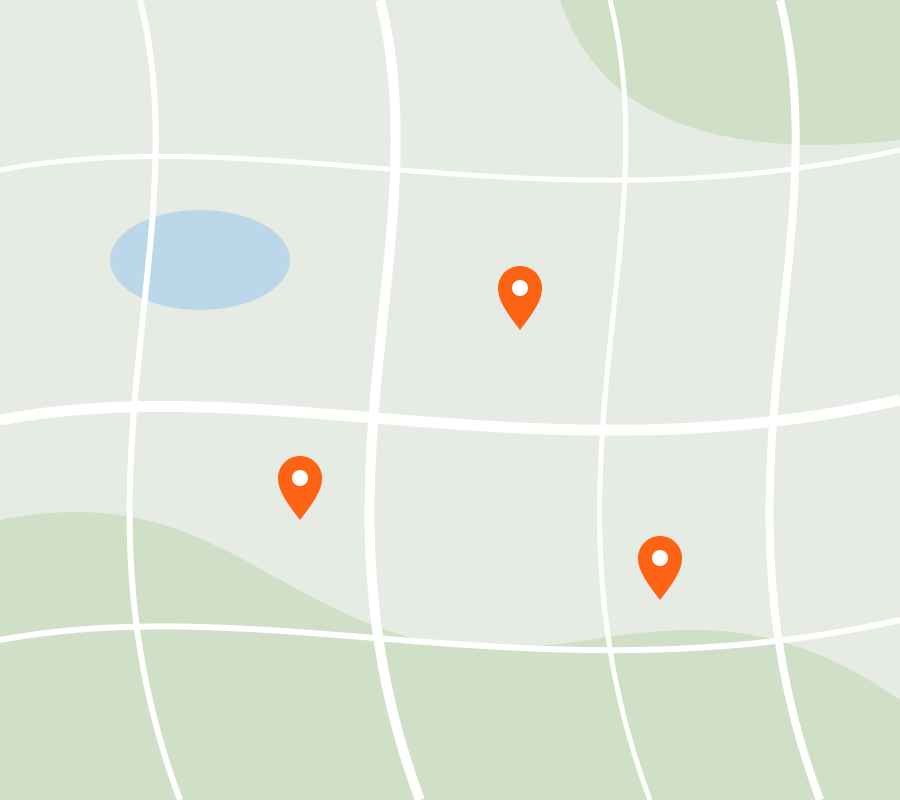
Atmos Energy supplies gas to both Crandall and Heartland, so many homes here heat with a gas furnace, and a growing share of them are brand new. The city grew from 2,858 residents in 2010 to 3,860 in 2020. Heartland has reached its final phase just to the north, Cartwright Ranch is planned for about 3,900 homes off US 175, and Crandall ISD now serves about 7,500 students on nine campuses. The town goes back to around 1880, when the Texas Trunk Line Railway came through land owned by Rev. C. F. Crandall. It stayed a farm town in west-central Kaufman County for most of the century that followed.
Three kinds of homes in the Crandall area
The original town
The town's oldest houses are on the streets around Main Street, mixed in with homes from many decades since. In the older ones, heating and cooling was usually added or replaced long after the house went up, so we don't assume anything about the equipment's age or setup until we've looked. Inside the city limits, Oncor delivers electricity and the city provides water. Crandall handles construction and mechanical permits through an online portal, and a third-party firm does the inspections.
Heartland
Heartland is a separate, unincorporated community of 8,509 people (2020 Census) off I-20 at FM 741, between Crandall and Forney, and it's part of Crandall ISD. Huffines Communities began developing its first phase in 2004 and has built it out over 25 phases since. Builder guides list Trinity Valley Electric Cooperative for power and Atmos Energy for gas. Two decades of building means a 20-year-old furnace and a brand-new one can sit a few doors apart.
Cartwright Ranch and other new construction
Centurion American's Cartwright Ranch covers roughly 1,300 acres off US 175 and is planned for about 3,900 single-family homes, with D.R. Horton and Lennar among the builders. The houses are new and still under builder warranty. The active construction all around them causes its own problems, covered below.
Gas furnaces: the half of the system people forget
In a split system with a gas furnace, the AC's indoor coil is attached to the furnace and the furnace's blower moves the air for both. So a failed blower motor or furnace control board can stop your cooling in July. Attic furnaces, which are common in North Texas, also bake through the whole summer before they're asked to light in November.
The first cold night tends to expose the weak links: a dirty flame sensor that lets the burners light and then shuts them down, a cracked igniter, or a pressure switch that won't close. Our furnace repair page walks through that sequence step by step, and a fall heating tune-up catches most of these problems before the first cold front. If you ever smell gas, get out first, then call 911 and Atmos Energy from outside.
Heartland's early systems are coming due
Homes from Heartland's early phases, built from the mid-2000s on, have reached the age when original builder equipment gives out. The air conditioner usually goes first. Outdoor units in Texas heat commonly last 12 to 15 years, while a well-kept gas furnace that runs only a few months a year often outlasts them, so many owners end up deciding whether to replace just the AC or both.
Replacing only the AC can work if the furnace is sound and its blower can deliver the airflow the new coil is rated for. If the furnace is close to 20 years old too, doing both at once means one installation, matched equipment and one warranty start date. Our furnace installation page explains the trade-offs, including 80% versus 95% efficiency furnaces in an attic.
Living next to new construction
Warranty claims go through the builder first
While you're inside the builder's warranty period, report heating and cooling problems through the builder's warranty process, so the original installer fixes them under that coverage. Keep copies of every request and the response. If the warranty is about to end and a problem keeps coming back, get it documented before the deadline.
Dust from the lots next door
Grading, framing and drywall work on nearby lots send fine dust into every house around them, and much of it ends up in your return filter. While building continues nearby, check the filter monthly instead of following the schedule on the sticker. If dust keeps getting through, our indoor air quality page covers filtration upgrades worth considering.
Clay soil and brand-new lots
North Texas clay swells when it's wet and shrinks as it dries, and soil that was graded or backfilled around a new foundation keeps settling for a few seasons. The outdoor unit's pad often sits on exactly that disturbed strip next to the house. As the pad tilts, the refrigerant lines take strain where they connect and the compressor no longer sits level.
Every few months, check for a pad that's visibly out of level, lines that are kinked or rubbing, new rattles, or oily spots on the copper tubing, which can mean a refrigerant leak. Releveling a pad is a small job if it's caught early. A cracked line means a leak search, a repair and a recharge. Keep downspouts and sprinkler heads pointed away from the unit, because water soaking one side of the pad speeds up the settling.